IKING GROUP-INSULATION AND ACOUSTIC SOLUTION FOCUS
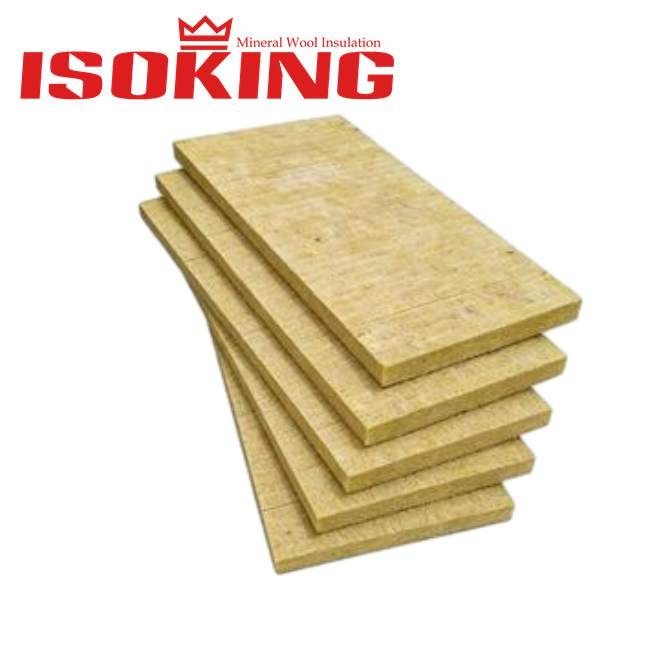
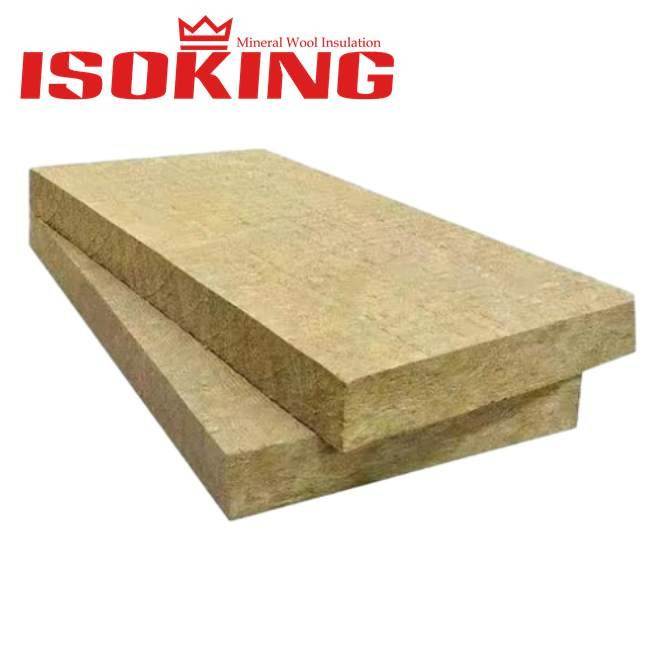
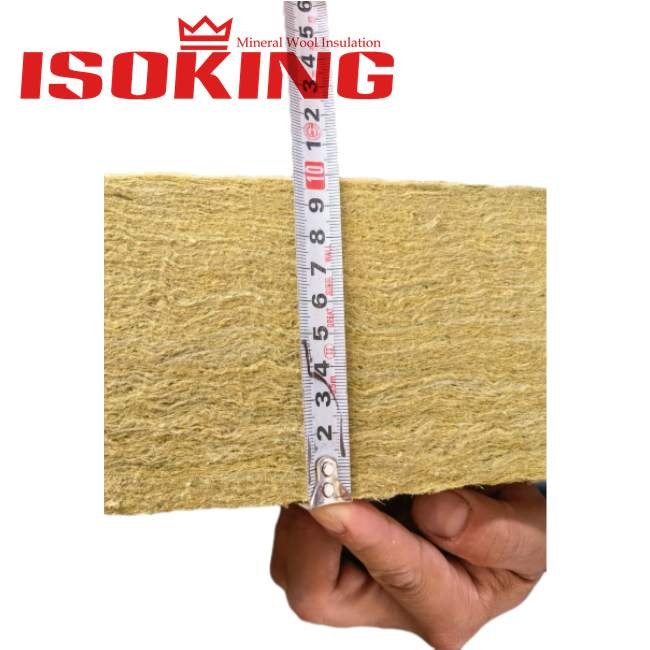
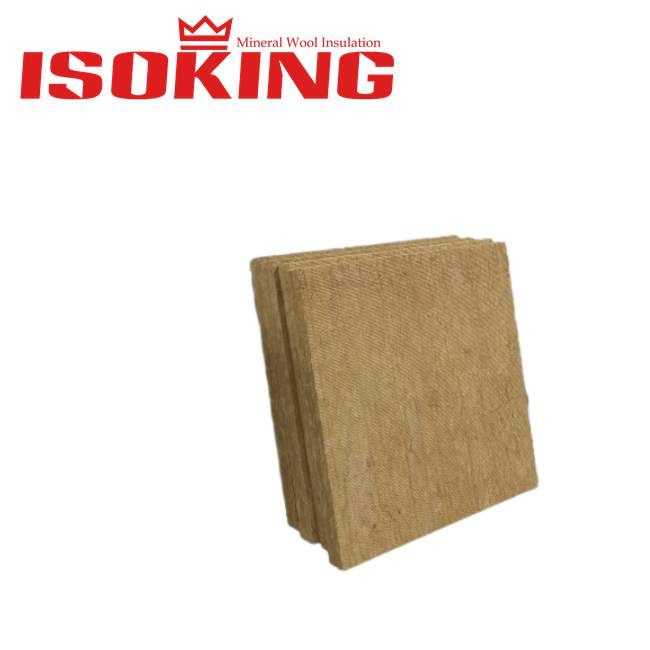
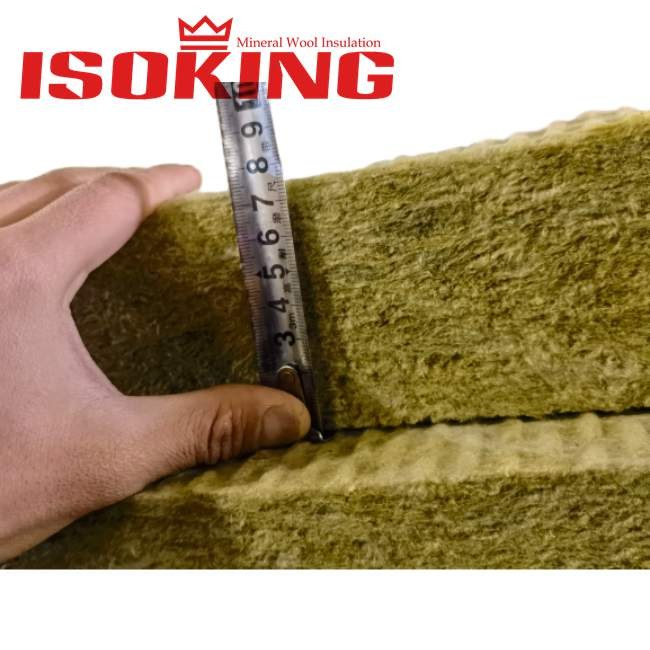
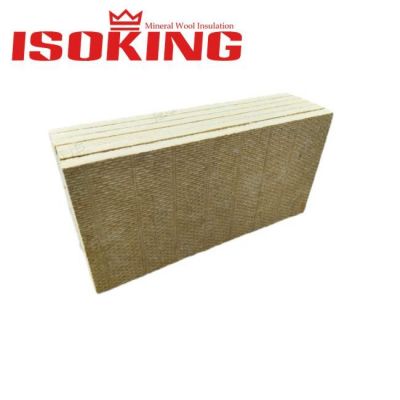
ISOKING mineral wool wall insulation boards are cut from basalt fibre and cured into a semi-rigid slab that holds its shape inside a stud bay. Boards are supplied between 60 and 120 kg/m3, 50–200 mm thick and 1200 × 600 mm as standard, and every batch carries an A1 non-combustible classification to EN 13501-1. For a 200 mm wall cavity, two 100 mm layers at 100 kg/m3 give the R30 build-up most buyers ask for.
Boards are friction-fitted between studs at 600 mm centres, so no adhesive is needed on site and the cavity stays fully filled with no bypass gaps. The factory cuts to the ordered density and thickness, packs on timber pallets and issues density, thickness and conductivity data with the shipment, which lets your engineer complete the U-value calculation without waiting for samples.
Mineral wool wall insulation for R30 stud walls and cavity fill
ISOKING mineral wool wall insulation is a semi-rigid basalt board supplied at 60–120 kg/m3 and A1 non-combustible. Boards friction-fit between studs at 600 mm centres, and a two-layer build-up of 2 × 100 mm reaches R30 in a 200 mm wall cavity — a specification buyers can check against their own U-value calculation.
A1
non-combustible, EN 13501-1
R30
2 × 100 mm in a 200 mm cavity
60–120
kg/m3 density range
≤0.040
W/(m·K) at 40°C
Reaches R30 without thickening the wall
Two 100 mm layers fit a 200 mm stud cavity and deliver an R30 design value at 100 kg/m3; the same board stacks to lower U-values where the frame allows a deeper zone.
Friction-fit, no cavity gaps
Semi-rigid boards cut 5–10 mm over the stud spacing spring into the bay and stay tight, so air does not bypass the insulation and the rated R-value holds in service.
A1 fire performance in the cavity
Basalt fibre melts above 1000°C and the board stays non-combustible for the life of the building, which keeps a wall build-up compliant when the cavity doubles as a fire barrier.
Technical data
| Property | Value | Test / remark |
|---|---|---|
| Density | 60 / 80 / 100 / 120 kg/m3 | EN 1602 |
| Thickness | 50, 60, 75, 100, 120, 150, 200 mm | EN 823, tolerance T2 |
| Board size | 1200 × 600 mm | Cut to stud spacing on request |
| Thermal conductivity | ≤0.040 W/(m·K) at 40°C | EN 12667 |
| Reaction to fire | A1 non-combustible | EN 13501-1 |
| R30 build-up | 2 × 100 mm at 100 kg/m3 in a 200 mm cavity | Design value, confirm with project U-value calculation |
| Compressive strength | ≥40 kPa at 10% deformation | EN 826 |
| Water absorption | ≤1.0 kg/m2, 24 h | EN 1609, water-repellent grade |
| Service temperature | up to 650°C | No binder burnout below this limit |
| Melting point | >1000°C | Basalt fibre |
| Facing options | Plain, aluminium foil, wire mesh | Foil facing for vapour control layers |
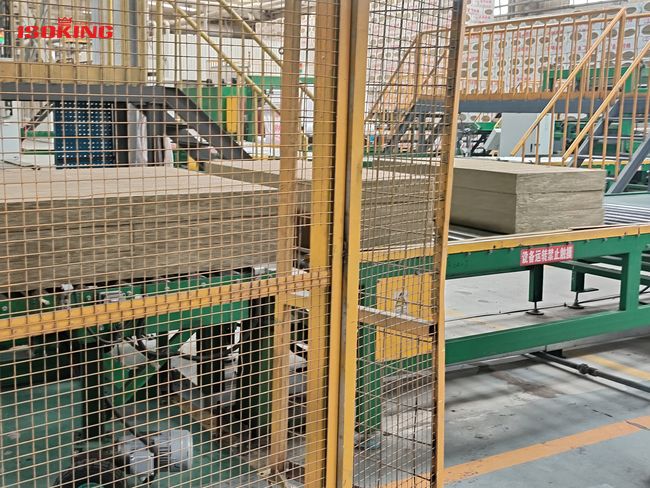
Boards coming off the forming line — thickness and square edges are checked on every batch before packing.
Timber and steel stud walls
Cut to the stud bay and friction-fitted between 600 mm centres, then closed by sheathing or plasterboard on both sides.
Rainscreen cladding cavities
Fills the ventilated cavity behind the cladding without blocking drainage, keeping the facade build-up non-combustible.
Acoustic partitions
Dense boards inside twin-frame partitions add mass and absorb airborne sound while the wall stays slim.
Retrofit and loft cavity fill
Boards slide into existing cavities through openings and can be layered to lift an older wall towards R30.
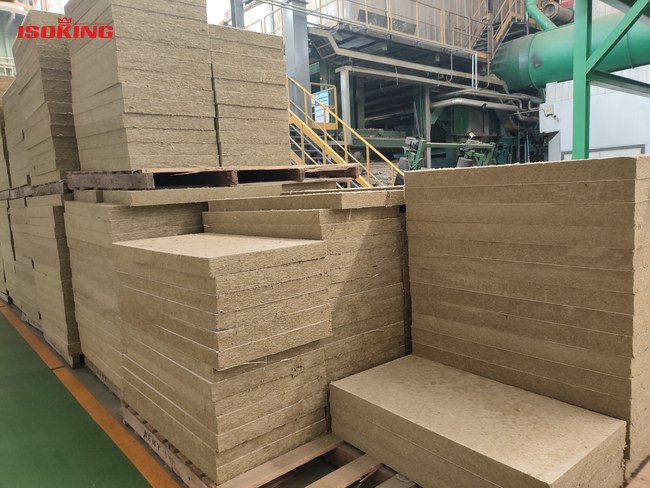
Pallets staged for loading — boards are strapped and wrapped to survive a 40HQ container transit.
Packing and loading
Boards are stacked on 1.2 × 1.2 m timber pallets, shrink-wrapped and strapped; a 40HQ container takes around 12 pallets depending on density and thickness. Pallet height is capped so the load stays within container payload.
Standard boards ship in 10–15 days; faced, cut-to-size or mixed-density pallets take about 20 days. Private label and pallet marking are quoted per order.
Questions buyers ask before ordering
Which build-up gives R30?
Two layers of 100 mm at 100 kg/m3 inside a 200 mm cavity. Confirm against your project U-value calculation before fixing the density.
Can boards be fixed without adhesive?
Yes. Boards are cut slightly oversize and friction-fitted between studs; retention clips are added where the project specification requires them.
Do you supply U-value calculations?
We issue density, thickness and conductivity data for your engineer's calculation; a project-specific U-value report is quoted separately.
How is the board protected in transit?
Each pallet is wrapped and strapped; boards handle normal site handling without losing thickness, but keep pallets under cover until fixing.
Is a test report supplied with the order?
A1 classification, density and thermal conductivity reports ship with the container; batch-level certificates are available on request.
Send your wall build-up and we will quote the board
Tell us cavity depth, density, thickness and container quantity; we reply with FOB price, packing plan and matching test reports.
CHINA IKING INDUSTRIAL GROUP CO., LTD
E-mail: zoebai@ikinggroup.com
Tel: +86-22-60767280
Cel Phone: +8618020008725(Wechat, WhatsApp)
Office Add: 14 floor, Zhiyun Building No.2, Linke Middle Road, Hedong District, Tianjin City, China
Office Add2: Room 2003, No. 2 Haibin 6th Road, Tianjin Pilot Free Trade Zone (Tianjin Port Bonded Zone), China